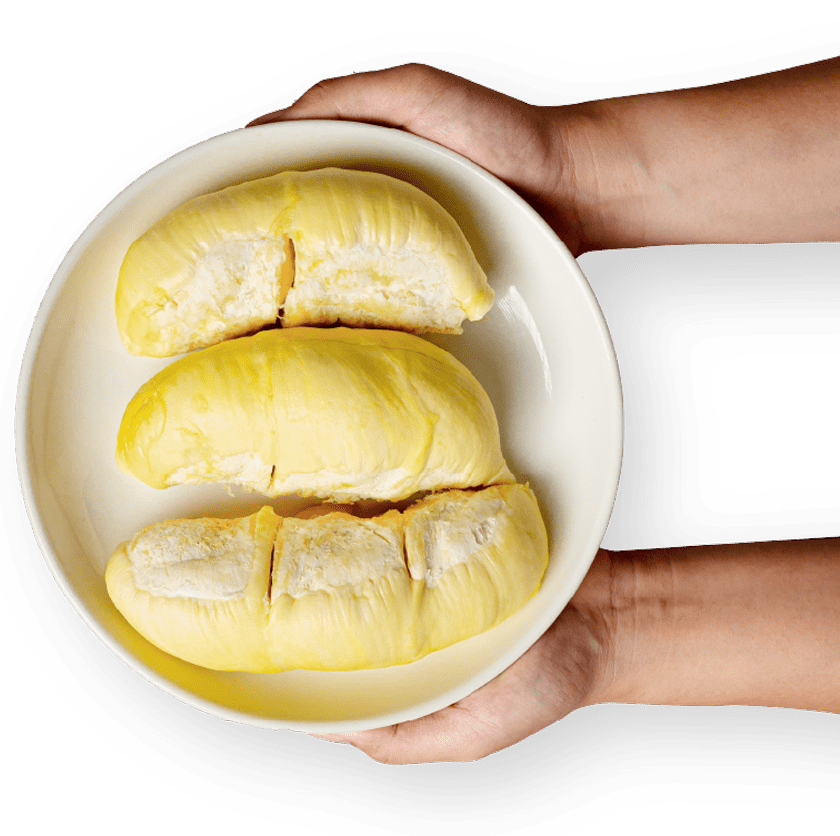

23 Jan Top Fruits Plantation Consultancy: How to Grow Durian from Saplings
Top Fruits Plantation Consultancy: How to Grow Durian from Saplings
By Top Fruits Team | January 23, 2026
Growing your own durian tree is a dream for many durian lovers and tropical home gardeners. Yet, countless beginners start by planting durian seeds—only to feel disappointed years later by slow growth, unpredictable fruit quality, or trees that never fruit at all.
The good news? There’s a faster, more reliable way to grow durian successfully: starting with grafted durian saplings.
In this guide, Top Fruits Plantation Consultancy breaks down exactly how to grow durian from saplings, why saplings outperform seeds, how to choose quality planting material, and what to expect in the early years—especially in tropical regions like Southeast Asia.
Whether you’re a home gardener, small-scale farmer, or durian enthusiast, this step-by-step guide will help you start right.
Why Growing Durian from Saplings Is Better Than Seeds
By now, you may have noticed that most online guides focus heavily on growing durian from seeds. While seed planting may sound simple, it often leads to long-term frustration and unexpected challenges along the way.
That’s why experienced growers favour saplings. Let us show you why starting with saplings is the smarter, more reliable choice for successful durian cultivation:
1. Genetic Reliability (Consistent Fruit Quality)
Durian seeds do not produce identical fruit to the parent tree. Even if the seed comes from a premium Musang King, the resulting tree may produce inferior fruit—or none at all.
Grafted saplings, on the other hand:
- Preserve the exact characteristics of the parent tree
- Ensure known taste, texture, and aroma
- Reduce the risk of unpleasant surprises years later
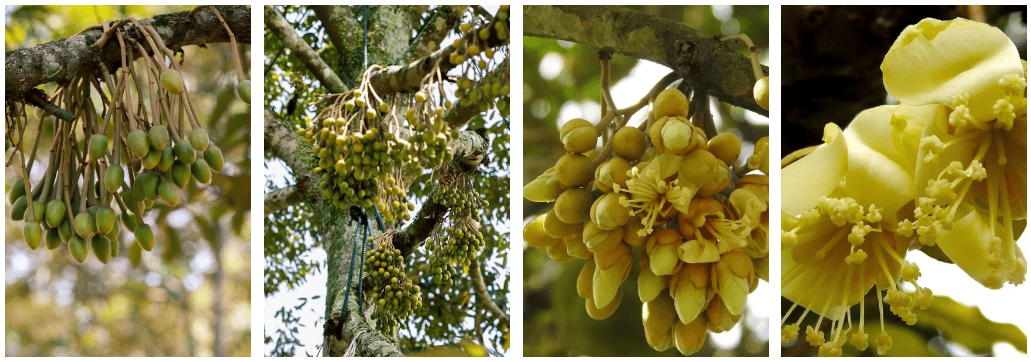
2. Faster Time to Fruiting
Time matters—especially for growers.
- Grafted durian saplings: Fruit in 4–6 years
- Seed-grown trees: Can take 8–10 years or more
That’s a difference of several years before your first harvest!
3. Stronger, Healthier Trees
Saplings from certified nurseries are:
- Selected for strong graft unions
- Grown under controlled conditions
- Screened for early disease symptoms
Because these saplings have undergone research and development, they are more resilient during transplanting and better equipped for healthy early growth.
4. Higher Survival Rate
Saplings from certified nurseries are carefully selected for strong graft unions, grown under controlled conditions, and screened for early signs of disease.
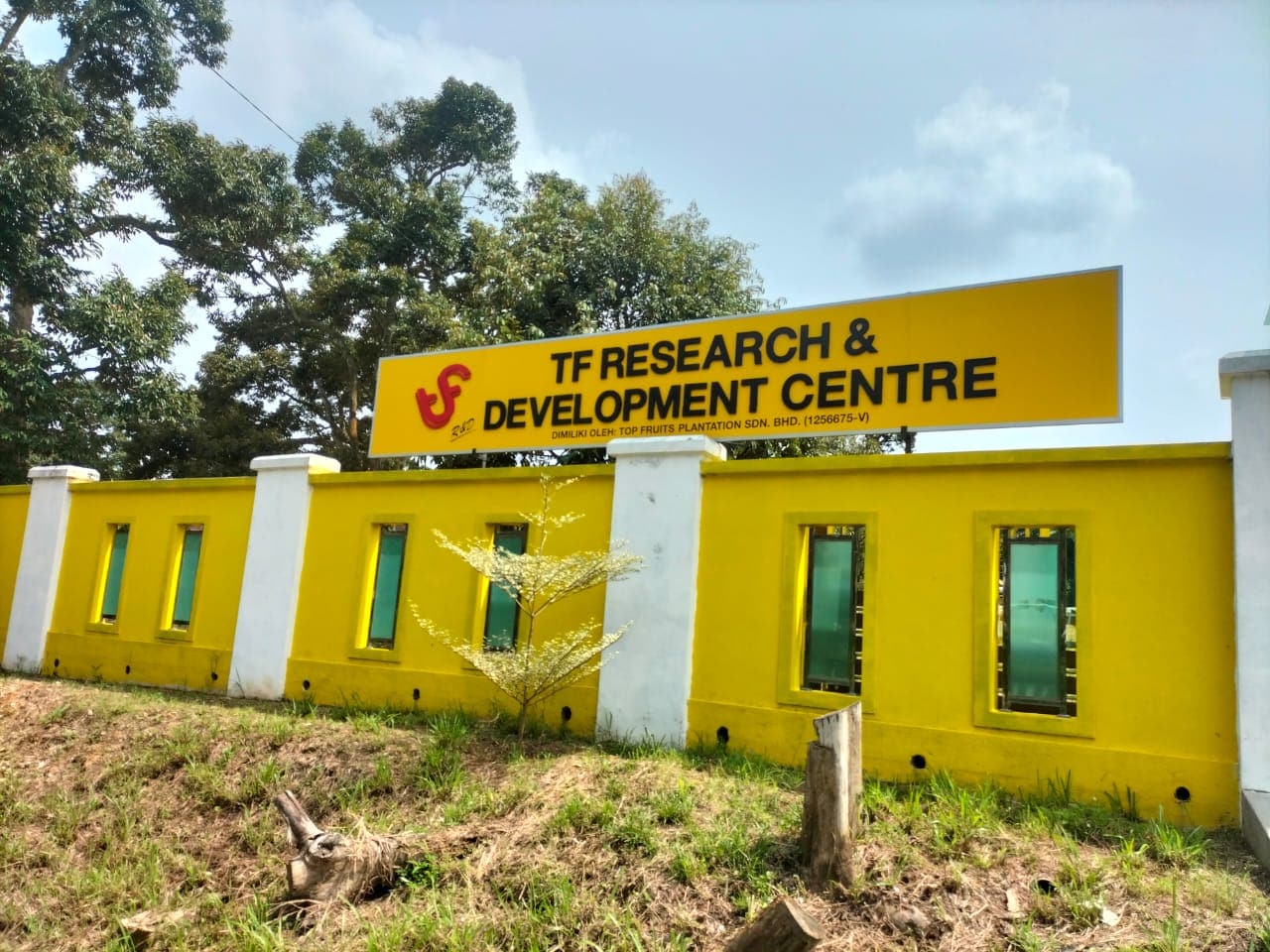
As a result of this research-backed process, they are more resilient during transplanting and establish healthy early growth more reliably.
At Top Fruits, our Research & Development works with local and international universities, research institutions, and industry leaders helps drive sustainable and profitable durian growth for farmers.
We conduct testing and analysis on soils, plant tissues, and agrichemicals to optimize planting methods, improve yields, and reduce production costs.
All of which aids durian farmers or green fingers enthusiasts achieve their goals of having a fully matured fruit-bearing durian tree!
How to Choose the Right Durian Sapling
Choosing the right sapling is one of the most important decisions you’ll make. A poor-quality sapling can cost you years of effort.
1. Where to Buy
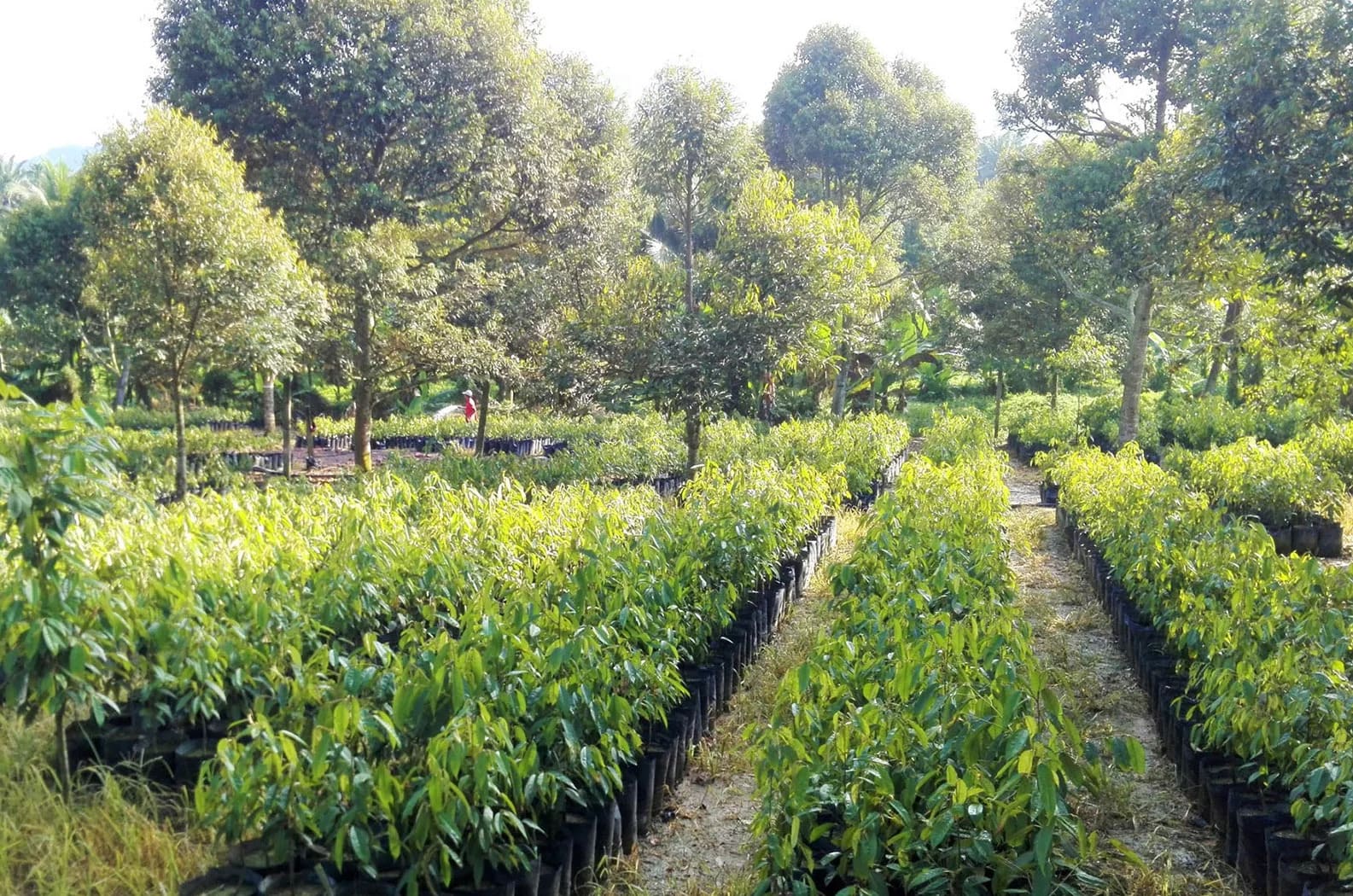
Choosing the right source is just as important as choosing the right sapling, as it directly affects tree health, fruit quality, and long-term success.
| Always Buy From | Why It Matters |
|---|---|
| Certified agricultural nurseries | Follow proper propagation standards and supply true-to-type grafted saplings. |
| Agriculture department–approved sellers | Comply with local regulations and plant health guidelines. |
| Reputable plantation consultancies | Provide expert advice, traceable sources, and proven clones. |
2. What to Avoid
Avoiding the wrong sources can save you from poor-quality saplings, wasted effort, and delayed fruiting. Here’s why:
| What to Avoid | Potential Risks |
|---|---|
| Roadside sellers | Inconsistent quality and poor survival rates |
| Uncertified saplings | Incorrect variety and delayed fruiting |
| Sellers lacking grafting records | Seed-grown trees with unpredictable outcomes |
| ✨Tips: Ask for proof of grafting and variety labels before purchasing. |
3. A Checklist of What to Look For in a Healthy Sapling
Before making your purchase, use the checklist below to ensure you’re selecting a healthy, high-quality durian sapling that will establish well and thrive long term:
| ✨Tips: For better cross-pollination and improved fruit yield, consider purchasing two compatible durian varieties rather than planting just one. |
Preparing the Right Planting Site
Durian trees are sensitive during their early years. Proper site preparation greatly increases survival and long-term productivity.
1. Ideal Growing Conditions
- Sunlight
- 6–8 hours of direct sunlight daily to support healthy leaf and flower development.
- Soil
- Loamy, well-drained soil
- pH between 6.0 and 7.0 for optimal nutrient uptake
- Water
- Keep soil consistently moist but avoid waterlogging
- Standing water can damage durian roots
- Spacing
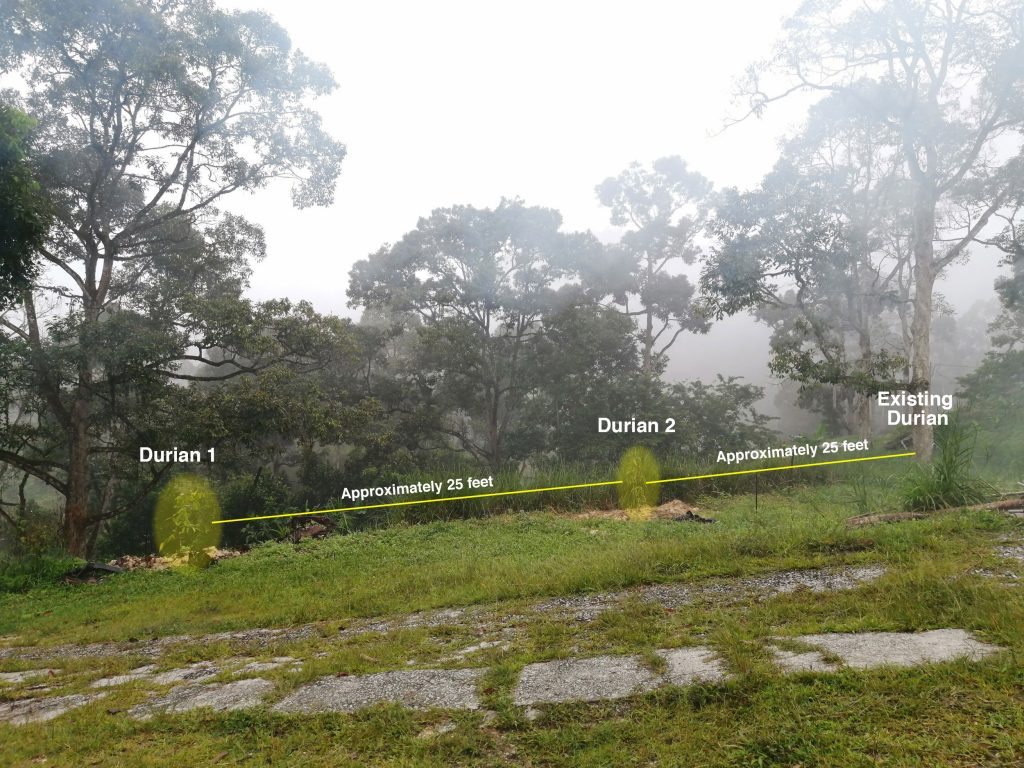
- Maintain 8-10 metres between trees
- Ensures good airflow, sunlight penetration, and canopy development
- Wind Protection
- Plant near natural barriers like hedges or trees
- Use windbreaks in open or windy areas to prevent damage
With so many durian cultivars in the market, choosing a sapling to grow can be a bit of a headache! Ease your worries by reading our article on: Durian Planting : Exploring The 10 Best Durian Cultivars to Grow in Malaysia.
Step-by-Step Guide: How to Plant a Durian Sapling
Step 1: Prepare the Planting Hole
- Dig a hole 60 cm × 60 cm × 60 cm.
- Mix topsoil with:
- Organic compost
- A small amount of sand (for drainage)
- Leave the hole exposed for 1–2 weeks to reduce soil acidity.
Step 2: Transplant the Sapling Carefully
- Water the sapling in its nursery bag before planting.
- Cut open the bag gently (do not pull the sapling out).
- Place the sapling upright in the center of the hole.
- Fill with soil and press lightly around the base.
Step 3: Watering & Temporary Shade
- Water lightly immediately after planting.
- Provide temporary shade using:
- Banana leaves
- Shade netting
- Maintain shade for 2–3 weeks.
- Water every 2–3 days, depending on rainfall.
Step 4: Mulch & Protect
- Apply mulch (coconut husk, dried leaves) around the base.
- Keep mulch away from direct contact with the trunk.
- Use fencing or bamboo rings to protect against animals.
Step 5: Early Growth Care
- Begin light fertilisation after 1 month.
(Detailed fertiliser schedules are covered in our dedicated fertilisation guide.) - Prune small side shoots early to encourage a strong central stem
| ✨When to Expect Durian Fruits: One of the most commonly asked questions is how long it takes for durian trees to bear fruit. Grafted saplings typically produce their first fruits within 4–6 years, while full fruiting maturity is usually reached around 8 years and beyond. The speed of growth and fruiting depends on several factors, including soil quality, local climate, and consistent aftercare. |
Aftercare Overview
Durian trees need ongoing care, but you don’t need to master everything at once.
- Fertilisation: Apply NPK (Nitrogen, Phosphorous, and Potassium) fertilisers every few months.
- Pest & Disease: Watch for leaf blight and borers.
- Pruning: Maintain a balanced canopy.
- Mulching & Weeding: Keep the base clean but protected.
Noticed pests or dark spots on your durian leaves? Protect your tree and maximise your yield—learn how in our full guide on pest and disease management.
Local Tips for Tropical Growers
For durian growers in Malaysia, Thailand, Indonesia, and the Philippines, these regions provide ideal tropical climates for healthy tree growth.
It is highly encouraged to plant durian at the end of the rainy season or during the early dry period, as this helps the saplings establish strong roots.
Avoid planting just before extended rainy spells, since excessive water can increase the risk of root rot.
Additionally, choose local nursery varieties that are well-adapted to your area’s soil type and rainfall patterns to ensure better survival and fruiting success.
Start Strong with Top Fruit’s Durian Saplings!
Growing durian doesn’t have to be slow or uncertain.
By choosing quality grafted saplings from Top Fruits, which are backed by research and development and expert consultancy, and by preparing your site properly, you set yourself up for years of healthy growth and rewarding harvests.
Whether you’re planting for personal enjoyment or long-term investment, starting with Top Fruits’ saplings is the smartest move for a successful durian plantation.
Book your consultation with us today, and let our experts guide you toward healthy, fruit-bearing durian trees with maximum yield!
FAQ
How long before my durian tree produces fruit?
Grafted saplings, which are the standard for commercial varieties, typically begin to bear fruit much sooner than seed-grown trees, usually within four to six years under optimal growing conditions.
Consistent care—including proper watering, nutrient application, and pest management—is crucial for encouraging this quicker fruiting cycle. Seed-grown trees, in comparison, can take significantly longer, often requiring eight years or more.
Can I grow durian in a pot?
Durian trees are not recommended for long-term container cultivation because they develop an extensive root system, including a deep taproot, that requires significant space. To thrive and eventually produce fruit, the tree needs deep, unconstrained soil where its roots can fully establish themselves.
While you can start the tree in a pot, it must be transplanted to the ground within a year or two for successful, long-term growth.
What soil is best for durian?
The ideal soil for durian is loamy and deep, offering excellent drainage while still retaining some moisture and being rich in organic matter.
The tree particularly dislikes having “wet feet,” so the soil must not become waterlogged. A slightly acidic to neutral pH range of 6.0−7.0 is considered optimal for nutrient uptake and overall tree health.
How tall should my sapling be before planting?
An ideal height for transplanting a durian sapling is generally around three to four feet, as trees of this size are well-established and more resilient.
Taller or older saplings often have a better survival rate and may begin fruiting faster once planted. When you transplant, ensure the sapling’s leaves have hardened off (matured) to prevent sun damage immediately after planting.
Do I need more than one durian tree to get fruit?
While some durian varieties are considered self-pollinating, cross-pollination is highly recommended to ensure better and more consistent fruit set and yield. It is therefore advisable to plant at least two different but compatible durian varieties close to one another.
Bats and moths are the natural pollinators, making mixed-variety planting the best way to leverage natural pollination processes.
What’s the best durian variety for beginners?
Musang King (D197), D24, and Monthong (D159) are excellent and popular choices for new growers due to their reliability and relatively consistent performance across various suitable climates.
Musang King is highly sought after for its rich, buttery taste, while Monthong is known for its large size and manageable texture. Choosing a local, well-adapted variety is always a smart strategy for a new durian farm.