
04 Feb How to Know If A Durian is Spoiled: Signs, Causes and Prevention Tips
How to Know If A Durian is Spoiled: Signs, Causes and Prevention Tips
By Top Fruits Team | February 4, 2026
Durian is known as the King of Fruits—but even kings can fall short. A single bad durian can turn an expensive treat into a disappointing (and sometimes unsafe) experience.
Most online guides focus on how to choose a ripe durian. Very few teach you how to detect a spoiled durian, especially after buying it. That’s where many beginners get tricked.
Top Fruits’ guide gives you a complete, beginner-friendly, step-by-step checklist—from buying and inspecting, to storing and eating durian safely.
Whether you’re a durian lover, home gardener, or small-scale farmer, this article will help you avoid costly mistakes.
How to Choose a Good, Ripe Durian (Buyer Checklist)
Durian isn’t cheap. Premium cultivars like Musang King or Black Thorn can cost several times more than common varieties.

Before learning spoilage signs, you must understand what good looks like.
1. Check the Stem (Freshness Indicator)
| Fresh Durian Stem | Old or Stale Durian Stem |
|---|---|
|
| ✨Tip: Rub the stem lightly. A fresh stem smells grassy—not musty. |
2. Examine the Husk & Seams
What to look for:
✨Tip:
|
3. Smell Test (Very Important)
| Good Durian Smell | Warning Smells |
|---|---|
|
4. Shake Test (Use With Caution)
Shake the durian gently and hear these sounds:
- Rattling sound → usually ripe
- No sound → could be unripe or a soft-flesh cultivar
| ⚠️ Important: Some premium cultivars naturally have soft flesh and won’t rattle, even when perfect. |
5. Weight & Shape
- Heavier durians = fuller pods
- Avoid oddly lopsided shapes (uneven ripening)
- Premium cultivars often have a balanced “golden egg” shape
6. Cultivar-Specific Buying Tips
Different durian cultivars, whether premium or not, have different traits to their aroma, texture, and taste!
It is important to avoid any misunderstanding that leads to wrong rejections.
| Cultivar | Normal Traits | Don’t Misjudge As Bad |
|---|---|---|
| Musang King (D197) | Bitter-sweet, dense, golden flesh | Soft flesh ≠ spoiled |
| D24 | Mild aroma, pale yellow | Lighter smell is normal |
| Black Thorn | Very creamy, fast-ripening | Short shelf-life |
| Tekka / Red Prawn | Orange flesh, sweet | Naturally softer |
| XO Durian | Slight fermented note | Mild bitterness is normal |
How to Spot a Bad or Spoiled Durian (Defects to Reject)
Even the most experienced durian lovers can occasionally be fooled by appearances. Knowing what not to buy is just as important as knowing what makes a great durian.
The list below details how to spot warning signs that indicate spoilage, poor quality, or potential food safety issues:
1. Holes or Borer Marks on the Husk
Small pin-sized holes, dark spots, or tunneling marks on the husk often indicate insect or borer infestation. These pests lay eggs inside the durian, and the larvae feed on the flesh as the fruit matures.
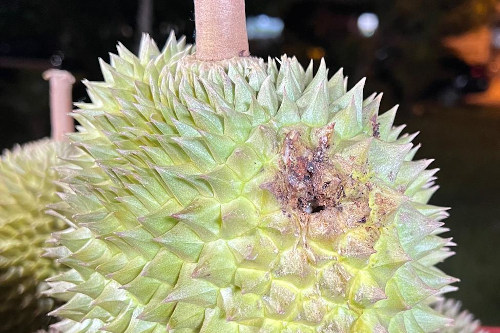
Why this matters:
- Internal damage may not be visible from the outside
- Flesh can be contaminated or partially rotten
- Higher risk of unpleasant taste and texture
If you notice multiple holes or soft areas around them, it’s best to reject the durian immediately — no matter how tempting the size or variety.
2. Leaking Liquid or Wet Spots
A fresh durian should feel dry and firm on the outside. Sticky, brownish, or watery liquid seeping from the seams or spikes is a major red flag.
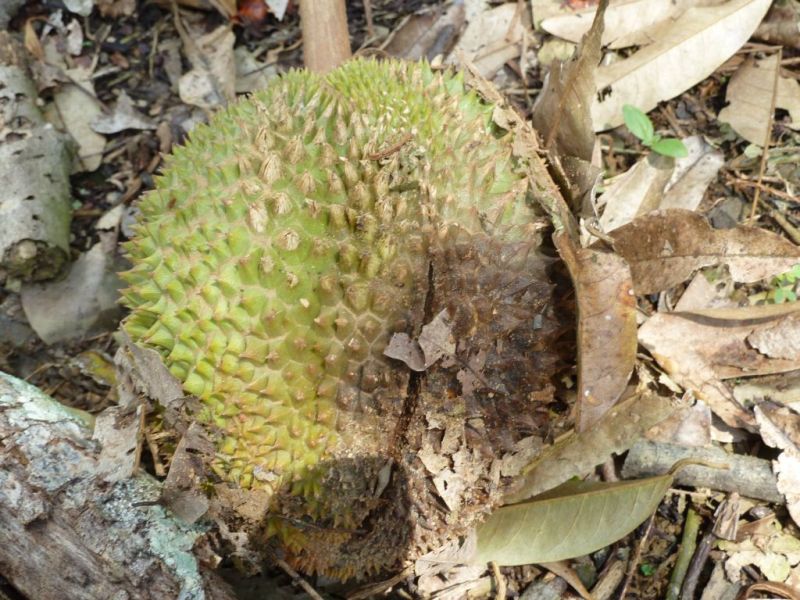
This usually indicates:
- Internal rot
- Over-fermentation
- Flesh breakdown due to extended storage
Such durians often have an overpowering smell and mushy texture inside. They are no longer safe or enjoyable to eat and should be avoided.
3. Opened Seams Before Buying
Durians naturally split open when they reach peak ripeness, but timing matters. If the seams are already wide open at the stall, it often means the fruit has been sitting for too long.
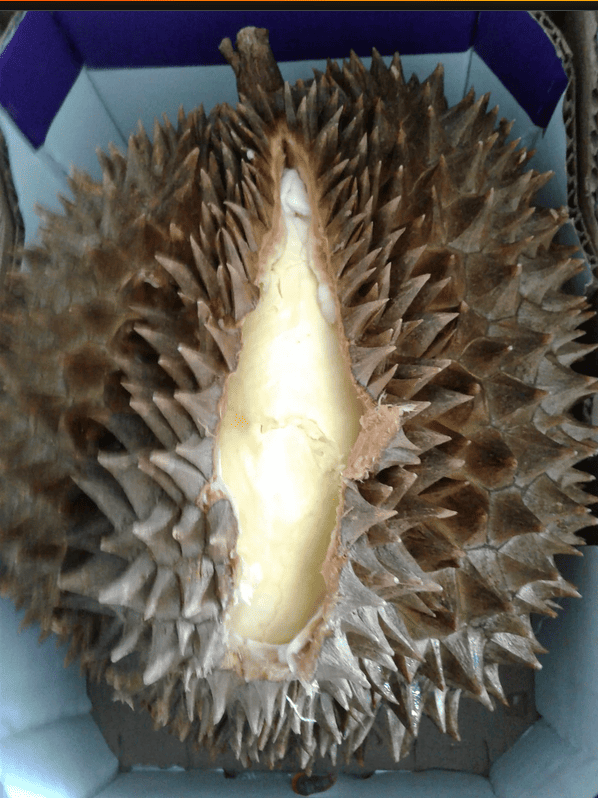
Watch out for:
- Gaps wide enough to expose flesh
- Forced openings using tools
- Dry or darkened edges along the seams
These signs usually indicate an overripe durian with a very short remaining shelf life. Always ask the seller when the durian split — a recent natural split is fine, but older splits often lead to rapid spoilage.
4. No Smell or Foul Smell
A durian’s aroma tells you almost everything about its condition.
- No smell at all → likely underripe, bland, and starchy
- Sharp sour or alcoholic smell → overripe or spoiled
- Rotten or chemical-like odor → unsafe to eat
A good durian should have a strong but pleasant fragrance, whether creamy, sweet, or slightly bittersweet. A “neutral” smell is never a good sign.
5. Flesh Texture Problems (After Opening)
Once the durian is opened, the flesh should be smooth, creamy, and custard-like (depending on variety).
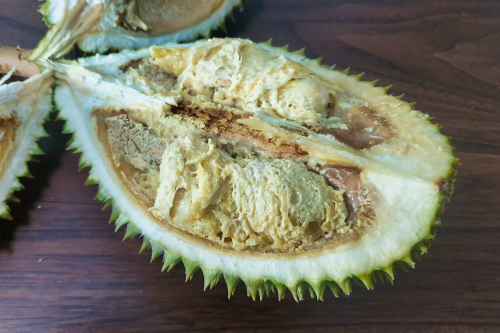
Reject the fruit immediately if you notice:
- Watery, soggy, or runny flesh
- Grey, brown, or black patches
- Visible mold or fuzz
- Strong alcoholic or sour odor
These issues indicate advanced spoilage, even if parts of the durian look acceptable. When in doubt, trust your senses — especially smell and texture.
| Avoid profit loss and disruptions! Our guide on how to prevent durian diseases and pests has got you covered. |
Durian Food Safety: What Most Buyers Don’t Know
Durian is often discussed in terms of taste and ripeness, but food safety is just as important — especially for consumers who buy from roadside stalls, wet markets, or pre-packed suppliers.
Understanding where risks actually come from can help you enjoy durian with greater confidence.
1. Pesticides & Chemical Ripening
Many buyers worry about chemicals being absorbed into the durian flesh. In reality, most pesticide residues are concentrated on the outer shell, not inside the edible pulp. The thick husk acts as a natural barrier.
That said, safety still matters:
- Always wash your hands and tools after opening a durian
- Avoid touching the flesh after handling the shell
- Do not place opened durian directly on unclean surfaces
Another concern is artificial ripening agents. While durians are typically tree-ripened, some suppliers may use chemical methods to speed up the process.
To reduce this risk, buy from regulated and certified sources that follow proper harvesting and handling standards.
2. Hygiene When Sellers Open Durians
How a durian is opened can significantly impact food safety. Even a high-quality fruit can become contaminated if handled poorly.
Before buying, observe whether:
- Knives are clean and not rusted or sticky with residue
- The durian does not touch the ground or dirty surfaces
- Sellers use gloves or visibly clean hands
A clean opening process reduces the chance of introducing bacteria onto the flesh, especially in hot and humid environments where microbes multiply quickly.
Pre-Packed Durian Flesh Risks
Pre-packed durian flesh is convenient, but it comes with higher safety risks if not handled correctly.
Key things to know:
- Pre-packed flesh requires a strict cold chain from packing to purchase
- Even brief temperature fluctuations can accelerate spoilage
- Once chilled flesh warms up, bacteria grow rapidly
Avoid pre-packed durian if:
- The flesh looks watery, mushy, or unusually soft
- There is discoloration or dark patches
- The aroma is sour or alcoholic
When in doubt, freshly opened durian from a trusted seller is often the safer choice.
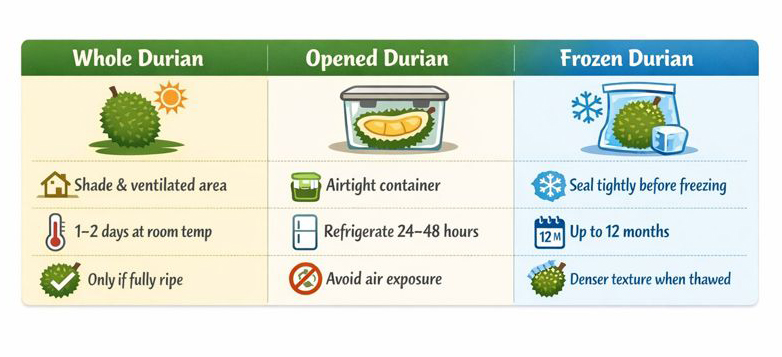
How to Store Durian Properly (Whole & Opened)
Here’s a quick guide on how to store durians properly, whether whole or opened:
| Can’t finish your durian in one go? Check out our article on how to keep it fresh and delicious for tomorrow! |
Common Durian Seller Tricks (Know Your Rights)
Buying durian can sometimes be tricky, as some sellers use clever tactics to make lower-quality or older fruits appear fresh.
Knowing these common tricks helps you protect yourself and enjoy only the best durians.
| Seller Claim / Trick | What It Really Means | How You Can Protect Yourself |
|---|---|---|
| “This hole is natural” | Often caused by pests | Ask to inspect the pods before buying |
| Mixing low-grade pods inside premium shells | Selling lower quality inside expensive durians | Request the durian be opened on the spot |
| Selling yesterday’s durian as fresh | May be overripe or stale | Smell and check the stem; walk away if suspect |
| Wetting stems to fake freshness | Makes old durians look fresh | Inspect the stem and overall fruit condition |
Top Fruits: Your Trusted Sources Matter
Top Fruits operates close to durian plantations, ensuring faster harvest-to-processing time and better freshness.
Our farms are MyGAP-certified, and manufacturing follows HACCP & GMP standards, making them a trusted leader in frozen durian export.
Explore our shop with different durian products ranging from frozen whole durians to seedless pulp and premium durian desserts.
Top Fruits ensure quality you can trust.
FAQ
How do you know if a durian is bad?
A spoiled durian often gives away its condition through smell, appearance, and texture. Look for sour or off-putting odors, leaking or excessive liquid, pest holes in the shell, unusually watery flesh, or a sharp alcoholic smell. Any of these signs means it’s best not to eat it.
How should a good durian smell?
A fresh durian has a rich, sweet, and creamy aroma with a signature pungent edge. It should never smell sour, sharp, or fermented—these are clear indicators of spoilage.
Is it safe to eat slightly watery durian?
No. Watery flesh is a warning sign that the fruit is starting to break down internally. Eating it could result in an unpleasant taste or digestive issues.
How long can durian last in the fridge?
Once opened, durian should be stored in an airtight container. Under proper refrigeration, it typically stays fresh for 24–48 hours. Beyond that, the risk of fermentation and spoilage increases.
What colour should durian flesh be?
Durian flesh comes in a variety of shades depending on the cultivar, from pale yellow to deep golden or orange. Look for consistent, vibrant colour and creamy texture—dull or discoloured flesh may indicate overripeness or spoilage.
Can durian go bad after opening?
Yes. Once the shell is opened, durian is exposed to air and begins to ferment more quickly. Always store in an airtight container and consume as soon as possible to avoid spoilage.